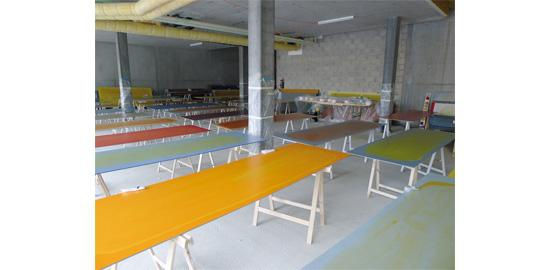
Catherine Bolle Swiss, b. 1956
Works


![Alphabet-Alphabeth ou Soleil au Nord [1], 2008](https://static-assets.artlogic.net/w_1600,h_1600,c_limit,f_auto,fl_lossy,q_auto/artlogicstorage/flartgallery/images/view/6348577c00de0840bd7615ae3b3685da/fabiennelevygallery-catherine-bolle-alphabet-alphabeth-ou-soleil-au-nord-1-2008.jpg)
![Alphabet-Alphabeth ou Soleil au Nord [3], 2008](https://static-assets.artlogic.net/w_1600,h_1600,c_limit,f_auto,fl_lossy,q_auto/artlogicstorage/flartgallery/images/view/4225273997524f01f5633f22229edc24/fabiennelevygallery-catherine-bolle-alphabet-alphabeth-ou-soleil-au-nord-3-2008.jpg)
![Alphabet-Alphabeth ou Soleil au Nord [4], 2008](https://static-assets.artlogic.net/w_1600,h_1600,c_limit,f_auto,fl_lossy,q_auto/artlogicstorage/flartgallery/images/view/3cfe20589f453f8ef9e0b8057d7ab1e9/fabiennelevygallery-catherine-bolle-alphabet-alphabeth-ou-soleil-au-nord-4-2008.jpg)
![Alphabet-Alphabeth ou Soleil au Nord [5], 2008](https://static-assets.artlogic.net/w_1600,h_1600,c_limit,f_auto,fl_lossy,q_auto/artlogicstorage/flartgallery/images/view/544284ba873155bd7407a11d3b22914c/fabiennelevygallery-catherine-bolle-alphabet-alphabeth-ou-soleil-au-nord-5-2008.jpg)
![Alphabet-Alphabeth ou Soleil au Nord [6], 2008](https://static-assets.artlogic.net/w_1600,h_1600,c_limit,f_auto,fl_lossy,q_auto/artlogicstorage/flartgallery/images/view/86db853e8d375c51bfc685188c2557bbj/fabiennelevygallery-catherine-bolle-alphabet-alphabeth-ou-soleil-au-nord-6-2008.jpg)
![Alphabet-Alphabeth ou Soleil au Nord [2], 2008](https://static-assets.artlogic.net/w_1600,h_1600,c_limit,f_auto,fl_lossy,q_auto/artlogicstorage/flartgallery/images/view/66062b14b4072da2b5f3f4ef2e18a2fdj/fabiennelevygallery-catherine-bolle-alphabet-alphabeth-ou-soleil-au-nord-2-2008.jpg)
![Alphabet-Alphabeth ou Soleil au Nord [7], 2008](https://static-assets.artlogic.net/w_1600,h_1600,c_limit,f_auto,fl_lossy,q_auto/artlogicstorage/flartgallery/images/view/ea92451d16717ef00a1d95f9f1c35ea3j/fabiennelevygallery-catherine-bolle-alphabet-alphabeth-ou-soleil-au-nord-7-2008.jpg)


Les Jeux arctiques ou les échelles du temps qui déjouent, 2021
Biography
![Catherine Bolle, Alphabet-Alphabeth ou Soleil au Nord [3], 2008](https://static-assets.artlogic.net/w_800,h_800,c_limit,f_auto,fl_lossy,q_auto/artlogicstorage/flartgallery/images/view/4225273997524f01f5633f22229edc24/fabiennelevygallery-catherine-bolle-alphabet-alphabeth-ou-soleil-au-nord-3-2008.jpg)
Alphabet-Alphabeth ou Soleil au Nord [3], 2008
Catherine Bolle (b. 1956, Switzerland) pursued a dual scientific and artistic education. She first trained as a physics laboratory technician at the École polytechnique fédérale de Lausanne (EPFL), then as a chemical engineering technician at the Technicum in Geneva, before studying at the École des beaux-arts of Sion (1976–1978).
In the early 1980s, Bolle became actively involved in photography and printmaking. From 1981 to 2000, she collaborated with Raymond Meyer’s printmaking workshop in Pully and, in 1984, co-founded a photography studio with Matthias Thomann. That same year, she founded Éditions Traces and has since produced more than one hundred artist’s books, a central aspect of her practice.
Since the 1990s, Catherine Bolle has been collaborating with architects and integrating her works to public spaces. These site-specific interventions explore the intersections between art and architecture, considering art as tied to spatial configurations and territories, rather than isolated objects.
Bolle’s practice is fundamentally interdisciplinary, encompassing drawing, painting, photography, film, tempera, engraving, installation, and publishing. Through sustained dialogue and collaboration with other creators—visual artists, writers, architects—as well as with scientific researchers, her work has been enriched by diverse perspectives, resulting in a multiplicity of forms and themes.
Nature is a driving force in Bolle's work. She incorporates mineral and vegetal elements, inspired by natural processes such as variation and metamorphosis. Water, essential to all life forms, is a recurring motif, often evoked through glass, whose transparency and material qualities reflect fluidity and impermanence.
Her fascination with contemporary poetry and literature also permeates her practice, which integrates text and calligraphic elements, blurring the boundaries between visual art and poetry. A recurring thread throughout her work is the notion of trace—natural or human—left upon the world, a concept that finds particular resonance in engraving, where meaning emerges through the interplay of emptiness and fullness, presence and absence, black and white.
Exhibitions
-

Lausanne – Almost forgot, we're moving
Group Show 11 - 21 Mar 2026After seven years at Avenue Louis-Ruchonnet 6, our Lausanne space is preparing to relocate closer to the lake at Avenue d’Ouchy 70, 1006 Lausanne. Over these seven years, we’ve hosted...Read more -
Zurich – Gesture & Imprint
Catherine Bolle 4 Mar - 25 Apr 2026Gesture & Imprint unfolds as a dialogue between drawing and etching, two practices grounded in the hand, reflection, and emotion. Bringing together colored-pencil drawings on photographs, works on acrylic glass,...Read more -
Good Morning Zurich!
13 - 28 Jun 2025The Opening Show: “ Good Morning Zurich! ” We are presenting a two-week ephemeral exhibition featuring a vibrant mix of works by artists from our program. This show is both...Read more -
From Print to Presence: An Exhibition of Inspiration
March 14 - May 11 in Geneva / March 15 - May 11 in Lausanne 14 Mar - 11 May 2024Step into the dynamic world of "From Print to Presence," where each poster is not just a visual masterpiece but a portal into the profound inspirations that birthed them.Read more

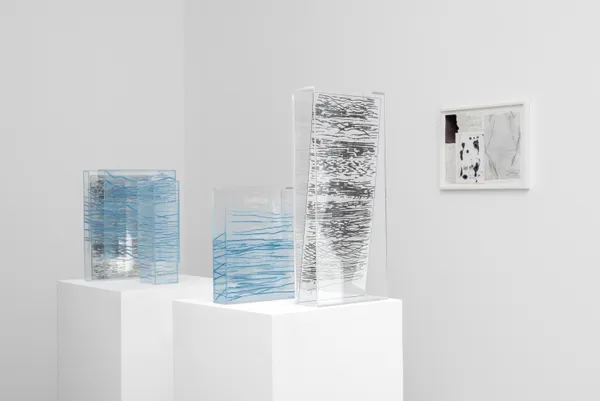
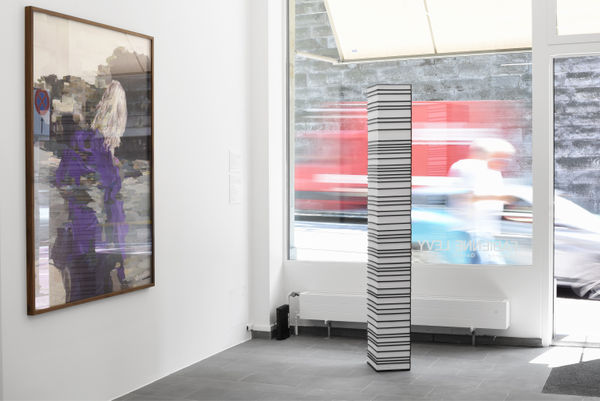


Installation shots




Press
-
Dans les galeries avec Laurent Delaloye
Laurent Delaloye, 24 Heures, April 25, 2024 -
Transformative Boundaries à la galerie Fabienne Levy
Sonia Jebsen, By the Lake, January 10, 2024 -
Une foule d'expositions étoile le ciel des fêtes
Irène Languin, Tribune de Genève, December 14, 2023 -
Les «eaux nomades» de Catherine Bolle inondent de sens
Florence Millioud Henriques, 24 Heures, September 18, 2021 -
Catherine Bolle expose à Sion et à Sierre son art au verso du monde
Jean-François Albelda, Le Nouvelliste, July 16, 2020 -
Catherine Bolle inclut tout un monde dans sa carte blanche
Florence Millioud-Henriques, 24 Heures, June 14, 2018 -
Carte Blanche à Catherine Bolle au Musée historique de Lausanne pour son centenaire
Infoméduse, May 31, 2018 -
Catherine Bolle renouvelle les participants de Bex & Arts
Etienne Dumont, Bilan, May 29, 2017 -
Catherine Bolle rêve «D'ici là» à la Galerie Ergasia
Florence Millioud-Henriques, 24 Heures, October 18, 2016 -
Comme il vous plaira: Catherine Bolle, Plasticienne
Espace 2 RTS, November 8, 2015 -
Dans les couleurs de Catherine Bolle
Espazium, June 25, 2013 -
Arquitextura: cuestión de piel
Alicia de Arteaga, La Nación, November 11, 2012 -
Catherine Bolle démontre que la spontanéité s'éduque
Philippe Mathonnet, Le Temps, July 24, 2001 -
Catherine Bolle remonte le temps en auscultant des grains de pollen
Philippe Mathonnet, Le Temps, September 24, 1999